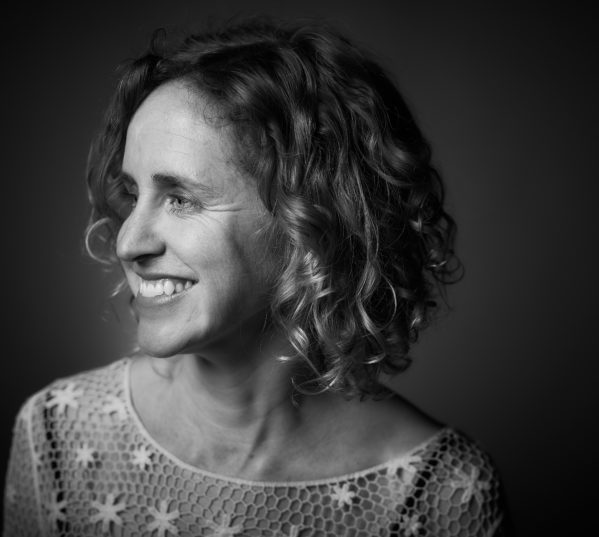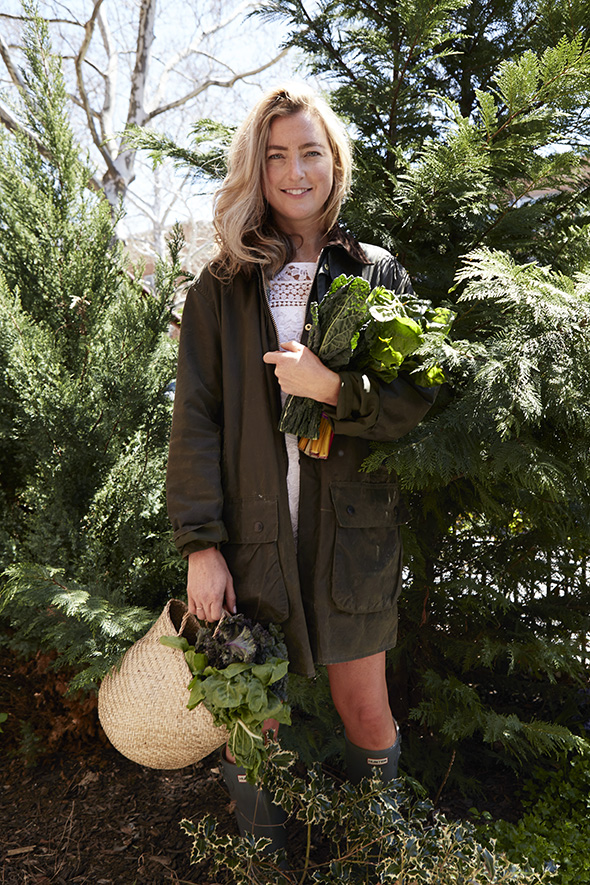
Katzie Guy-Hamilton knows a thing or two about delicious food! Her career has spanned from Director of Food and Beverage of Equinox Fitness to Global Director and Ambassador for chocolate brand Max Brenner International, to running the celebrated pastry program at New York’s Ace Hotel.
A few years ago, after crazy amounts of work travel began to take a toll on her health, Katzie began her training as a Health Coach and started down the path to wellness by eating clean, but soon realized something essential was missing…dessert! Today, Katzie cooks and eats with an approach that balances healthful entrées with satisfying treats.
This Friday we welcome Katzie to the Harmony Juice Bar to chat with us about her holistic approach to food (and life), and to demonstrate a recipe from her debut book, Clean Enough: Get Back to Basics and Leave Room for Dessert. Healthy snacks, sweet treats, and delicious conversation with friends: what could be better?!
One of the sweetest things about this event collaboration is that Katzie is a long time visitor to Nosara and a good friend of the Harmony. We’re very happy she is back to spend some time with us, and we shared a few minutes chatting about her time in Nosara, her collaboration with the Harmony Healing Centre, and how it was part of her journey in creating Clean Enough.
I think everyone has a story about how they came to Nosara the first time, how did you discover it?
A long time ago, an important person in my life mentioned this place called Nosara that he thought I would love. At that time in my life I was like Costa Rica? I want to go to St. Barts! Even though he kept telling me that Nosara would resonate with me, we didn’t go.
Fast forward to a late night chat with a friend who was going to Central America over the holidays and knew Monica from the Healing Centre. I was going through a work transition and she asked if I wanted to go have a respite in Nosara. And I thought Nosara? Ohhhhhh, Nosara! Seemed kismet, I booked my flight.
So what’d you think when you finally got here?
We were staying in Pelada, walking to Guiones along the beach after sunrise. I remember going to the Harmony and the moment we walked in, I just had this feeling that resonated with me. It was like, oh this is who I am – it’s a little bohemian, it’s a little luxury, it’s understated, and there’s a pulse here that’s thoughtful and intelligent. That’s when I met Monica over lunch…I totally remember that I got the spring rolls and while we were talking, we just saw something in each other. I think she knew that I was going to do more than even I knew what I was going to do, if that makes sense? I knew she recognized that in me, and it started our friendship.
We can all agree that Monica is amazing! And then you collaborated with her on a project at the Healing Centre?
Yes! During another visit, I was chatting with her and Heather Lundy, and we were just riffing off some thoughts I had about the wellness and retreat sphere in Nosara. I’m not an organized retreat person, I believe in self retreats. Whether it is a couple hours at home alone, a vacation by yourself, going away solo for the weekend…whatever it is, that moment to get away is so important. And look, I don’t want someone to give me a green juice and tell me this is how I detox, I like to design my self retreats in a way that makes sense for me. So the conversation we had that day was the beginning of the customized health concierge and restoration week program at the Healing Centre.
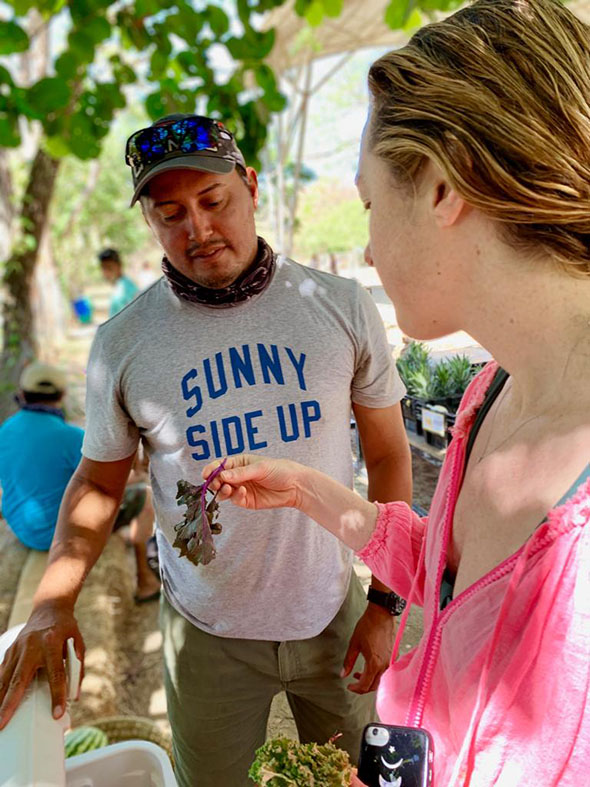
I see that program as a great tool for people to drop a little deeper into the restorative potential that this area is known for.
True, so many people come to Nosara to restore. People can be exhausted for so many reasons. You can be exhausted because you’re not eating properly, you could be overworked, under slept, and so on. The original concept to address this on the nutrition side was to help someone eat clean, nourish, and support vitality based on their needs. Eating clean means a lot of water, vibrant colors, things that don’t have a ton of oil, bread, dairy. Then there’s eating to nourish. When you’re exhausted, you don’t need a juice cleanse, you need to be eating rice, stews, risottos, the things that are grounding and nourishing. Then there’s supporting vitality. Some people want to take every surf lesson, every yoga lesson, do breathwork in the afternoon, run on the beach…that’s their vitality! They need energy for these activities and we looked at the foods that support that. I have to say it’s really nice to see the program in the Healing Centre offerings. To hold space for somebody, be their health coach, help them regenerate, and also give them a lifelong tool of knowledge that lasts beyond their stay is a really cool thing.
You’ve had a really amazing career journey – how did you add author to your list of accomplishments?
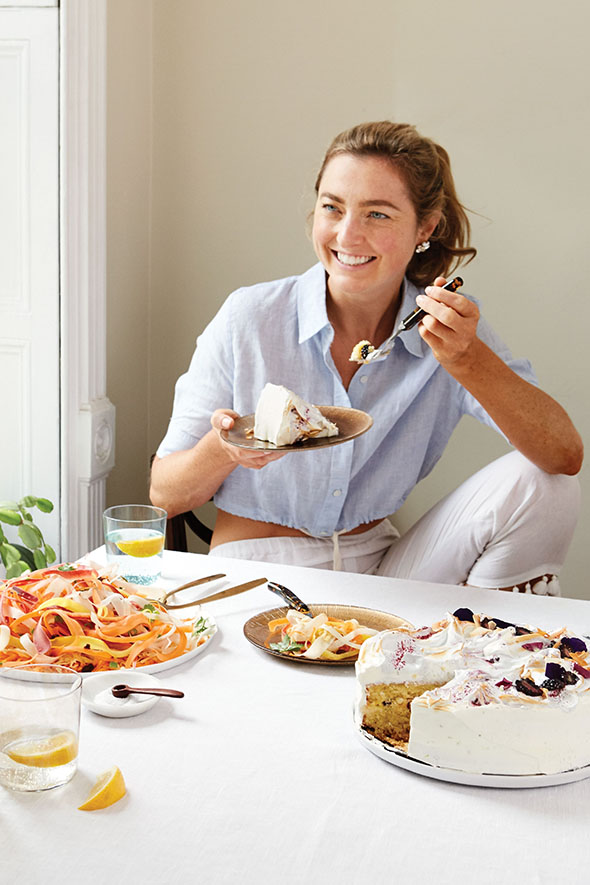
I’ve always wanted to write a book. I had a blog when I lived on the west coast called Dirt Cake, and Charlotte Druckman, an author and food writer, followed it. We connected and became friends, and she once told me in an email to hold on to the fact that I like to write because she thought I should write a book one day. That stuck in the back of my mind for a long time…it was always there. Just before one of my visits to the Harmony, I had started writing about self care, which would turn into the chapter in Clean Enough called Your Universe Feeds You. After I had been at the Harmony for a few days (I usually turn into a limp noodle four days in, and that’s the best feeling known to man), I got into my flow state and had this light bulb go off in my head. I was in the hotel lobby on those couches and all of a sudden the concept for Clean Enough dawned on me. And I’m not kidding you, a book started pouring out of me. Truthfully it all started to come together as I was sitting on the couches at the Harmony, somewhere in between a state of peace and joy.
Since you’ve spent a bit of time around our menus, I have to ask, what’s your favorite thing to eat at Harmony?
I’m obsessed with the banana nut smoothie at the Juice Bar! I remember sitting under the rancho there when I had it for the very first time. It turned into a daily thing! I would get a coconut from the coconut cart every day, and then that smoothie. I’d wait for it, and have it in the middle of afternoon, sipping it through that bamboo straw. It’s such a strong memory and I had to make my own version of it for Clean Enough. I made sure the photographer for the book shot it in one of those big shaker glasses with a bamboo straw!
I’m really glad that this place could be part of your creative process.
It was a dream to do something with the Harmony and to have the opportunity to honor that. I was really excited to name the section Harmony Bowls. Those recipes are all about being in harmony, having something that makes you feel good, and the notion of having some balance in your life. I wanted to honor Harmony in the book because I started writing it there. I whole- heartedly believe in what I’m doing and I feel like the Harmony shares that philosophy in what it does. It makes me feel connected to something that matters.
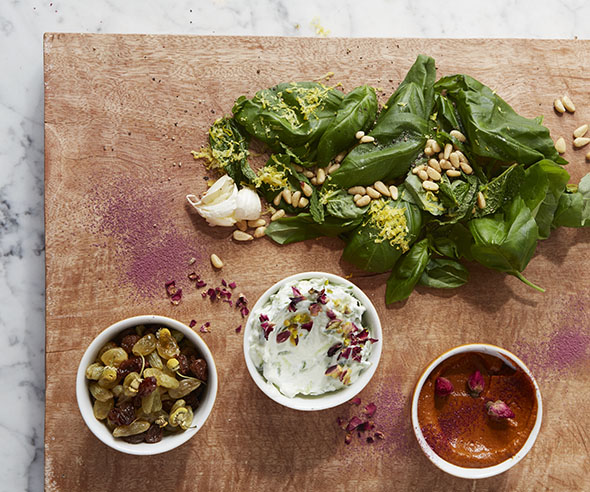
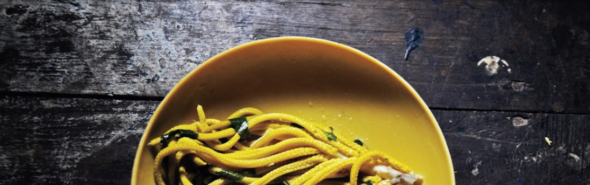
Katzie Guy-Hamilton will be at the Juice Bar Friday March 15, starting at 6pm. She will demonstrate her garden pesto along with a fresh zucchini salad, and chat with the audience about eating with simplicity, in Harmony and with elegance. Check out her delicious pesto recipe below!
Garden Pesto
Makes 1 Cup
Prep Time: 15 minutes
½ teaspoon Lemon Zest
15 g (1T) Lemon Juice
5g (1 each) Garlic Clove
40g (1 cup packed) Basil Leaves
20g (½ cup packed) Parsley Leaves
20g (½ cup packed) Mint Leaves
75g (1/3 cup) Extra Virgin Olive Oil
1 tsp Himalayan Pink Salt
½ tsp Black Pepper, freshly ground
25g (¼ cup) Pine Nuts (toasted or raw depending on your preference)
- Pile all the herbs on your cutting board with the clove of garlic and begin chopping.
- At this point you can rough chop the herbs down and then transfer to a mortar and pestle with the nuts and lemon zest, salt and pepper and begin to mash with the oil, seasoning with the lemon juice at the end.
- Alternatively, you can transfer the mixture to a food processor to pulse with the lemon juice and stream in the oil.
- Alternatively, you can make a finer puree by using a Vitamix blender, streaming in the olive oil.
- Finally, you can go ditch all these tools and finish by hand, chopping the herbs down with the garlic, nuts and lemon zest until very fine with the salt and pepper. Transfer to a bowl and stir in the lemon juice and olive oil as to not make a further mess of your cutting board.
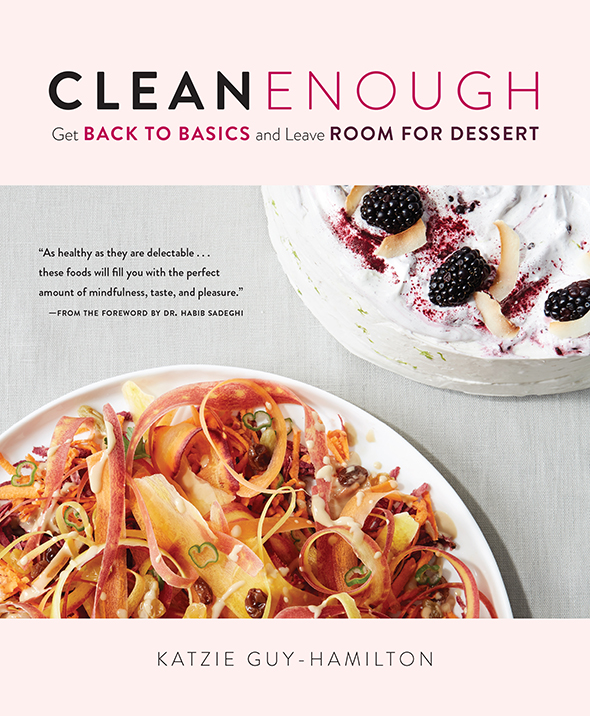
Recipe from Clean Enough: Get Back to Basics and Leave Room for Dessert © Katzie Guy-Hamilton, 2019.
Photography © Brian Kennedy, 2019. Reprinted by permission of the publisher, The Experiment. Available wherever books are sold. experimentpublishing.com