
Blog

SURFING IS… WITH DION MATTISON

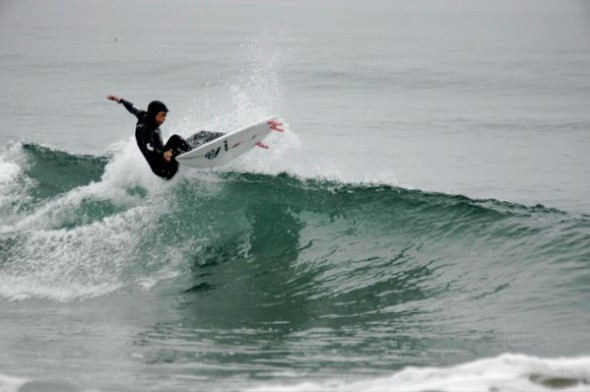
When Monterey Bay native Dion Mattison moved to New York from California, it didn’t take long for the city to get under his skin. “I came to New York in 2009 to get my PhD in Philosophy from the New School for Social Research,” he said.  “I’m now about a year off from completing that goal and have definitely fallen in love with New York in the process.” An avid and accomplished surfer, he was lucky to find a place where his academic drive and passion for surfing could intersect. When he’s not in the water, he’s writing his dissertation the history of philosophy’s attitude towards fashion, teaching fashion and aesthetic theory courses at the New School or giving private surf lessons through his of Conatus Surf Club (see blog). Read his thoughts on surfing below:

Name: Dion Mattison

Age: 33

Where do you live: Brooklyn (Prospect/Crown Heights)

Years surfing: 32

Surfing is:  Ha. I’ve written a ten page paper on this question. The problem I was trying to solve in the paper is why surfing is such a difficult practice to teach (something I do for a living). My hypothesis is that there is a general misunderstanding about what surfing is. It is clearly not just standing up on a wave and riding a board. It is this view of surfing that throws people off when they seek to practice it. It is also unhelpful to try to put it into the art or sport or religion categories. Doing that doesn’t do any work to help us understand what surfing is. In the paper I’m referencing I use Ludwig Wittgenstein’s concept of language-games to define surfing. For Wittgenstein language games are ‘forms of life’ with grammatical structures. So when I say that surfing is not just riding a board on a wave, not art, not a sport, I also mean to say that all of these are a part of surfing, but that they do not make up the whole of it—they are simply parts in its grammatical structure. It is also important to note that for Wittgenstein grammars are not concrete full stop, i.e., there are certain rules that are inviolable, but new ones may arise that come to alter or augment the existing grammar. For example, the use of jet skis in large surf to ensure safety. Surfing’s grammar is comprised of so many things: bathymetric, oceanographic meteorological knowledge (either in scientific or layman’s terms—basic ocean and wave knowledge), surfboard equipment, awareness of the practice’s historicity, lineup etiquette, the pro surfing sport aspect (which of course has its own grammar), social events, etc. There are some rules that take precedence over others for basic knowledge because the stakes are higher—this is why first and foremost surfing is establishing a relationship with the ocean, which by most standards is one of the most powerful and uncanny phenomena known to humankind. It is also about establishing relationships with the other people who have relationships with the ocean (not all who ride surfboards, to be sure)—this comprises a major part of the very crucial ethical dimension of surfing. I could obviously go on and on and explain surfing’s family resemblance to other practices/language-games; I can talk about private language and inner/outer distinctions, and the importance of exemplars and kinship structures (for my own surfing I am forever grateful to my father who taught me to surf and to Taylor Steele for making videos of Rob Machado available in the 1990s), but I think I’ll end soon instead. I want to stress that in defining surfing as a language game I am not promoting some kind of relativism—that surfing is relative to whomever practices it—no that cannot be the case. The advantage of the language game theory is that there is an inherent flexibility—there are artful and sporty and religious aspects to surfing—but there are also concrete rules—the first of which is: respect the ocean.
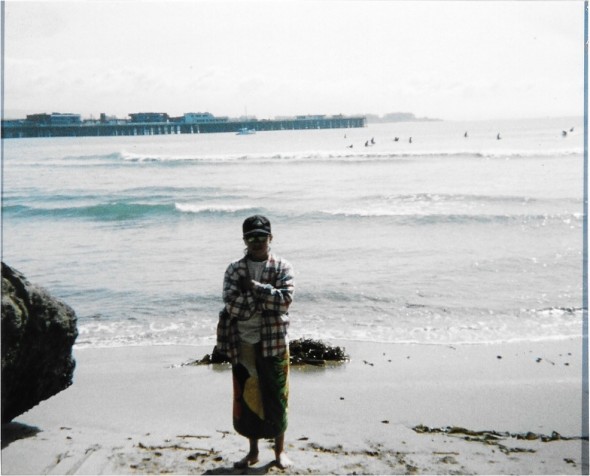
 

Vintage Dion
Fight Fracking

do one thing logoDuring natural-gas drilling known as “fracking,” chemicals, water and sand are injected into the earth in order to create enough pressure to crack open rocks and release oil or natural gas. The nearly 600 chemicals used in fracking include known carcinogens such as benzene, toluene, ethyl benzene and xylene, among others, which can leach into drinking water.

However, natural gas and oil companies, which still aren’t held accountable to the Safe Drinking Water Act, don’t have to disclose all of the chemicals that they use. These chemicals have been linked to neurological disorders, birth defects and cancer, among other significant problems, as a result of the practice.

This is serious, people.

To protect our water, you can join a coalition of concerned citizens trying to get fracking operations out of our communities. A great source for locating one near you is the non-profit organization Food and Water Watch.

Guiones Surf Photo of the Week

Great Misconception: Surfing is a Free Ride.  Except that you need to get to the waves (when the waves are there), you need to be fed, you need to have a place to sleep, you need to feed again.  A board, with no strings attached (pardon the pun).  Oh, and don’t forget the process of paddling out at beach breaks as a commoner- no jet skis or boats… while your muscles burn…and you take whitewater on the head, repeatedly.  All, at most, for seconds of Bliss.  But it’s worth it, isn’t It ?  Process, not Result, is a beautiful thing !

photo provided by Surfing Nosara

Emily Kimelman, A Writer Abroad


Name:
Emily Kimelman

Where do you live? No set address.

What is your main artistic practice? Fiction Writing.

What brought you to Costa Rica?
I came to Costa Rica to write the first draft of the 6th book in my Sydney Rye series. My series features a strong female protagonist and her rescue dog, Blue. Sydney Rye is recommended for the 18+ who enjoy some violence, don’t mind dirty language, and are up for a dash of sex. Not to mention an awesome, rollicking good mystery!

Each book takes place in a different location around the world. The first one was in New York where I conceived of the series and wrote UNLEASHED (A Sydney Rye Novel, #1). The follow up novella and third novel both take place in Mexico and the Caribbean  specifically St. Thomas where my father was brought up and where I got married. The fourth book, STRINGS OF GLASS, is set in India where I lived for a couple of months last winter. The fifth book, THE DEVIL’S BREATH, which is coming out in April, takes place in Miami and the Everglades.

I find that it helps if I live in my books location while I write the first draft. I like settling in somewhere for a couple of months and seeing what shows up. Costa Rica is the perfect setting for the adventure I’m working on.

What are you working on next?
Besides the new novel, I’m also turning my series into audiobooks. This March I’m hosting a contest to pick the Voice of Sydney Rye. You can vote on my website HERE. If you have never read Sydney Rye don’t worry. The first book is free. You can download it anywhere that ebooks are sold, see how Sydney sounds in your head, and then vote.

Where can we find your work?
My work is available wherever ebooks are sold. You can find links on my website. www.emilykimelman.com

SURFING IS…WITH GRAHAM SWINDELL

If you’ve ever been to Nosara, you’re probably aware of Nosara Shack. It’s a community hub.  It’s a photo studio.  And now, with its eponymous magazine, it’s a publishing house! We were lucky to get a few minutes of chat time with the Shack’s owner, former North Caroline native, Graham Swindell. The full interview will be posted on the blog in April, but in the meantime, we asked Swindell to finish the statement “Surfing is….”  Read his answer below and check back for the full interview!
Name: Graham Swindell
Age: 38
Where do you live: Nosara
Years surfing: 25
Surfing is..life consuming, but in a good way!

Graham with his family in Costa Rica

Where Do You Find Harmony?

The Harmony is hosting a video contest and there’s still time for you to enter! In honor of our latest contest, we’re sharing an interview by Malone Matson with Stephen Milner, a photographer and surfer who won a week at our Surf Survival Camp in our first contest.


Click to open slideshow. Photos by Surf Survival winner Stephen Milner

HB: There’s no denying that the Harmony is a very special place, what made it special for you?
Milner: The most special part of the Harmony to me was how close it was to the surf, how you could hear the ocean roaring from the back porch of your room. Also the Harmony’s commitment to sustainability and its responsible approach to the environment had a powerful impact on my stay.

HB: In what ways did your stay inspire you creatively, if any?
Milner: I recently graduated from the Savannah College of Art and Design with a photography degree. I found myself worn out, broke and seeing the same thing everyday. I was desperate to travel, and then I won this free trip to the surf survival camp in Costa Rica for a week. So yeah, EVERYTHING inspired me during my stay.

HB: Is there anything that you will always associate with your trip to the Harmony? A sight, smell, object?
Milner: I found a new love for avocados; I ate those every morning while I was staying at the Harmony.

HB: Any funny stories?
Milner: One morning I was paddling out and it was the day after the dangerous marine animals lecture, I was a little on edge about shark and crocodile attacks when out of nowhere a dark green object surfaced 2 feet away from my board. I immediately thought it was a crocodile and I yelped before realizing it was a giant sea turtle.

HB: Can you briefly describe your typical day at the Harmony during the Surf Survival Camp?
Milner: Wake up at 6:30am, get some fresh coffee and go check the surf, which was always firing. I would go out and surf for about two hours and then get breakfast and go right to Dr. Nathanson’s lecture. After the lecture I would usually go explore the coastline or the town and have some lunch and make it home in time for a late afternoon surf session.

HB: Were you particularly surprised about anything you learned during the camp?
Milner: That peeing on jellyfish stings doesn’t actually help.

HB: Of everything you learned, what information do you think will be most useful for you in the future?
Milner: That’s a hard question to answer, I learned a lot while I was at the camp. But, something that really stuck with me was preparing a proper first aid kit for the region you will be traveling to. Also researching and educating yourself on the area you’re going to be traveling to. Also something that stuck with me, “The surfboard fins are the sharpest teeth in the ocean.”

HB: Who would you recommend attend the next Surf Survival Camp?
Milner: Anyone who considers himself or herself a surfer. If you’re a beginner, it’s only going to boost your confidence and motivate you to surf. Also, as a photographer, I highly recommend to other surf photographers and videographers because whether they like it or not they will probably have to be the first to react if anything goes wrong on a surf trip.

HB: How did the camp boost your surfing confidence?
Milner: It boosted my waterman skills greatly in many ways. Having this new knowledge made me more comfortable with surfing in the water and out of the water.

HB: Every surf break and its surfers have their own personality, how would you characterize Guiones?
Milner: I think because there’s always some sort of surf-able waves, everyone in Guiones were always happy. People were friendly and laid back, even if there was a language barrier you could still get that great “Pura Vida” vibe.

Smell Better

do one thing logoWant to smell better? Avoid synthetic fragrances. They’re in our cleaners, air fresheners, beauty products and—of course—perfumes. And they’re pretty much all made from oil: According to the National Academy of Sciences, more than 95 percent of the chemicals used in synthetic fragrances are derived from petroleum.

Plus, they’re toxic: A study by the Environmental Working Group and the Campaign for Safe Cosmetics analyzed 17 of the market’s most popular perfumes and found that they contain, on average, 14 hazardous chemicals that aren’t listed on their labels; these chemicals can cause allergic reactions, reproductive damage and hormone disruption.

Need more? Synthetic perfumes just might make you fat: A study published by Mount Sinai Children’s Environmental Health Center linked phthalates in fragrance with obesity.

A great way to avoid synthetic perfumes is to simply read your labels: If you see the word “fragrance” and it doesn’t tell you what natural source it is derived from, put the product back on the shelf.

Guiones Surf Photo of the Week

Longboard: Right tool for this job. Winter in Costa—the fecund warmth, the vibrant colors, the buzz of life, alive. Out of the wetsuit back home and into some playful peelers.  Down right liberating. Making effort look effortless.  What a beautiful thing.

Photo by Surfing Nosara